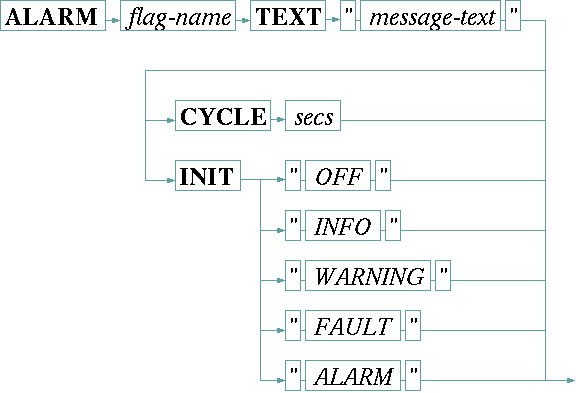
Alarm flags are a special variant of variables. They always are of the type BOOL and they are READONLY. For each ALARM variable you define a text message which appears in the Faults page of the device's user interface screen and as a message in the event log if the value of the flag changes. The device driver summarizes all alarm flags with each cycle and generates a summary fault information for the device. Alarm flags are defined with the ALARM statement:
An alarm flag definition consists of the ALARM keyword, the flag's name and an optional CYCLE definition which work analogous to the CYCLE modifier in a VAR statement.
The name of an alarm flag must be of the form faults.XX where XX is a two digit number in the range from 01 .. 98. The faults.99 is reserved for a communication fault.
The alarm flag definition may include an INIT clause which initializes the fault priority value of the flag. INIT must be followed by one of OFF, INFO, WARNING, FAULT or ALARM.
Example
    ALARM faults.01      TEXT "Remote access" INIT "WARNING"
    ALARM faults.02      TEXT "Synthesizer"
    ALARM faults.03      TEXT "LO-A lock"
    ALARM faults.04      TEXT "LO-B lock"
    ALARM faults.05      TEXT "Power supply"
    ALARM faults.06      TEXT "IF-LO level"
    ALARM faults.07      TEXT "RF-LO level"