
Events and Alarms
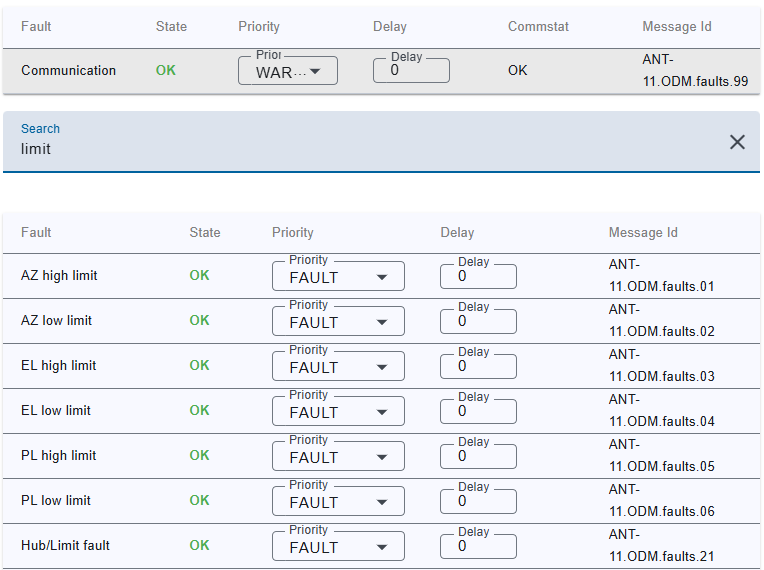
Events and alarms are a basic concept of any monitoring system. They are used to inform operators about thinks happens in their environment. Our built-in event handling consist of different parts:
- Event are created from devices, users or from the backend processes
- All events are stored in the event database, by default for 1 year
- Access to the actual or historical events via Webclient or API
- Event notification Add-ons sending selected events to external entities (e.g. via E-Mail)
Events have different levels of severity, ranging from informative to warning, error, and critical alarms. They are propagated through the system from the lowest level to the overall system state.The following drawing shows this information flow for a alarm or warning created by a device:

Notification
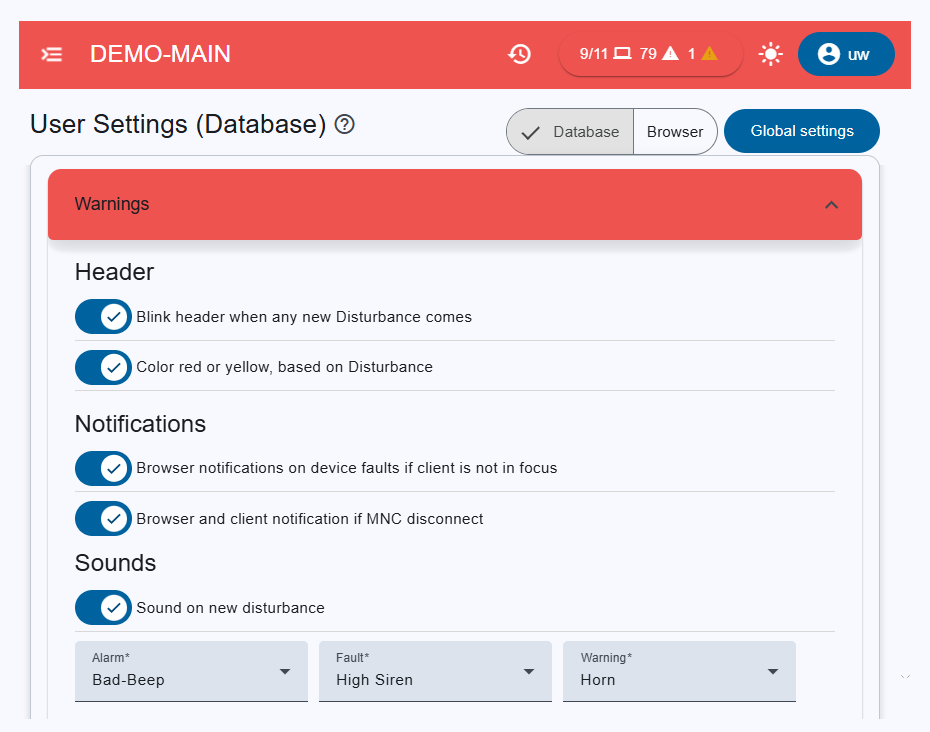
Finally, the operators will be informed live via various channels. For example:
- visually in device windows, title bar, browser notifications
- acoustic via clients PCs speakers
- by sending notifications to external systems
- as a chronological list the Live Log panel
- on external equipment via sat-nms IO-FEP relay outputs
The notifications can be configured from quiet to massively disruptive, regarding your needs - per user, per client or globally.
Event Report
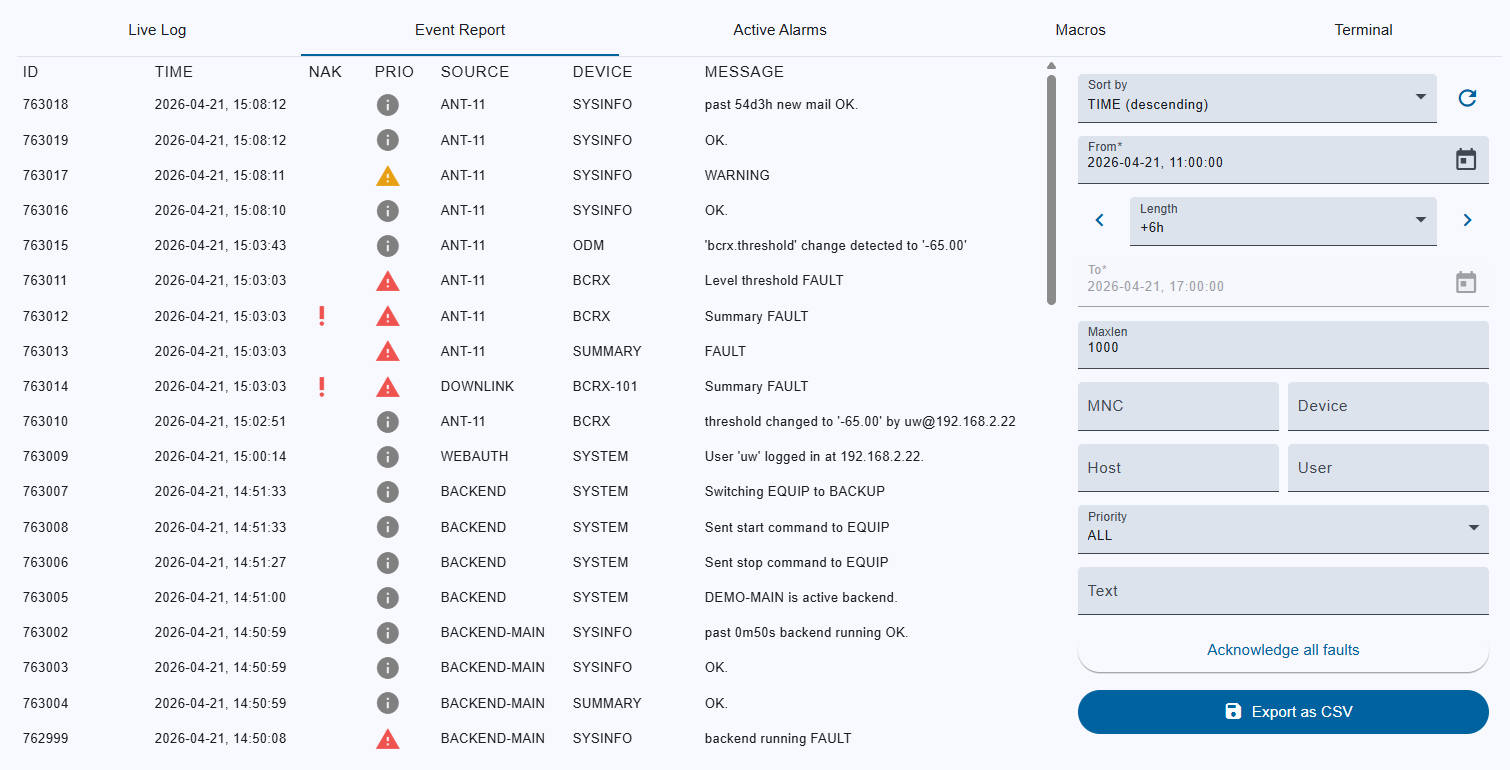
But of course, the events can also be evaluated afterwards with the Event Report window. Filters are available for
- Start/End Time and Duration
- Event-Source (MNC and Device)
- Event Priority
- User and Host Origin
- Full text search
This internal event database is optimized for fast storing and retrieving of events produced by the MNC system.
Redundancy Options
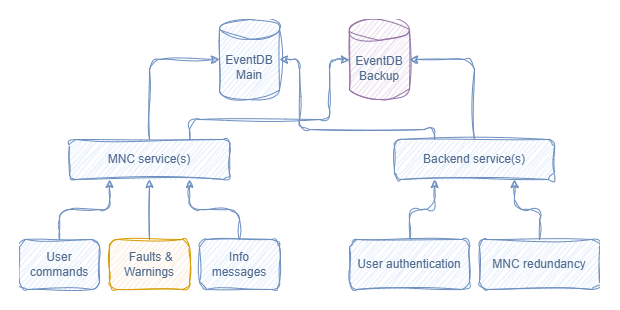
In simple Standalone M&C systems the event database runs directly on the same server - just built-in - no addition configuration required. But all "event producers" in the system are designed to submit new events not only to the local EventDB but also to up to two destinations. This allows a fully redundant event database setup consisting of a main and backup database, without additional synchronization.